

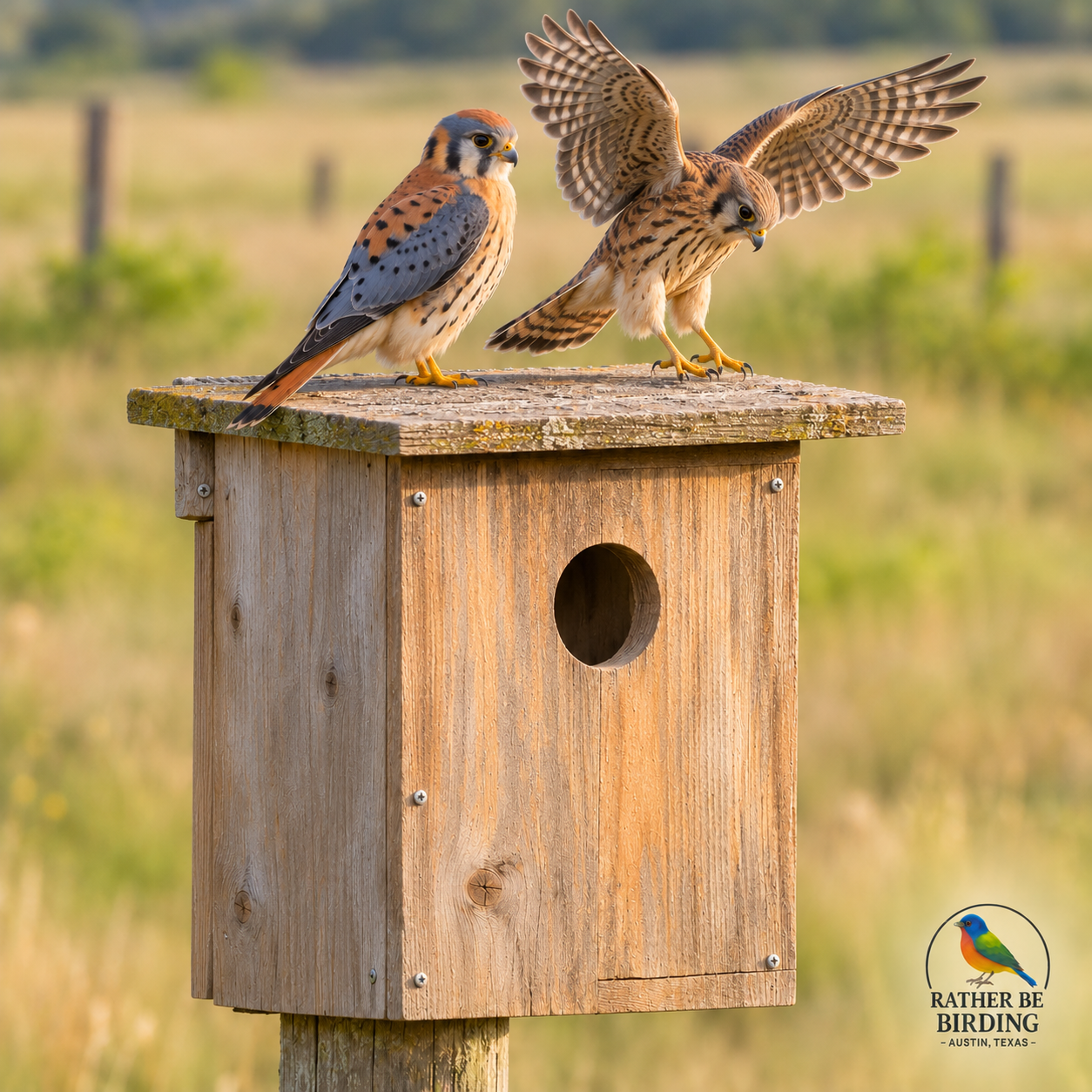
A Nest Box for American Kestrels
A kestrel nest box can help in suitable open habitat when it’s built, placed, and monitored carefully. Learn what to consider before you build, how to follow a species-specific plan, and where to share your observations.

Bringing Back the American Kestrel
The American Kestrel is familiar, colorful, and declining. Learn how researchers are working to understand the trend - and how you can contribute through NestWatch, local monitoring, habitat protection, and everyday choices that help keep this small falcon common.

Giving Back to Birds
You don’t need a big yard or a biology degree to help birds. Make a window safer, plant for local wildlife, join a bird count, volunteer, or help a new birder feel welcome. Start with one practical action and let it grow.
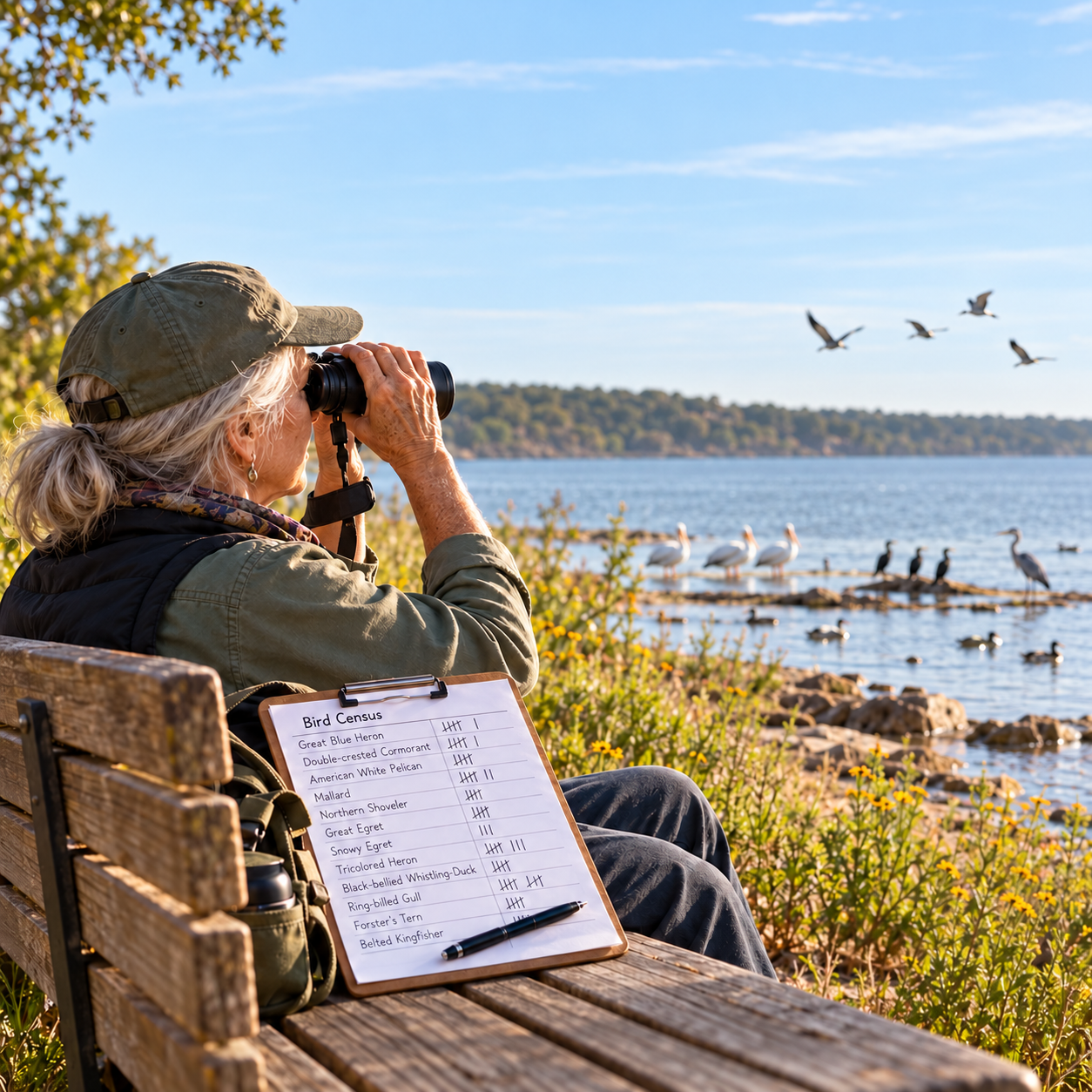
Birding is NOT a Passive Hobby
Birding begins with paying attention. Careful observations, safer homes and yards, and local conservation action can turn that attention into practical help for birds.

Purple Martins
Purple Martins are one of North America's greatest conservation success stories. Learn how these beautiful swallows came to depend on human-provided housing, why thousands gather in spectacular pre-migration roosts each summer, and how birders can help ensure their future.

Stewarding a Purple Martin Colony
Purple Martins are the only North American songbird that now depends entirely on humans for nesting (with some groups in the southwest still nesting in natural cavities). Learn where they live, what habitat they need, how to set up proper housing, and why monitoring for predators and invasive species is essential to helping this remarkable bird survive and thrive.

It’s Purple Martin Season!
Purple Martins now rely almost entirely on human-provided housing. Learn their habitat needs, house dimensions, and how to monitor and protect thriving colonies.

’Tis the Season for Christmas…Bird Counts!
You’re connecting with nature.
You’re helping protect something fragile.
You’re spending time with people who share your passion.
You’re giving back through science.
And you’re stepping into a tradition more than a century old.