

Birding Gets Better with Age
The Joy of Birdwatching in Every Season of Life

There is something wonderful about a hobby that can still surprise you after forty years—and welcome you just as warmly if you started last Tuesday.
Birding is that kind of hobby.
You can spend decades watching birds and still find yourself wondering what a chickadee is doing inside a curled leaf. You can begin at seventy and discover that the familiar trees outside your window contain an entire world you have barely noticed.
Birding for seniors offers room for discovery, companionship, learning, and quiet pleasure. It can fit an adventurous retirement, a busy working life, or a morning when the porch is exactly as far as you want to go.
Age does not automatically make someone a better birder. But experience, patience, and a changing sense of what matters can make birdwatching more rewarding.
Sometimes, the greatest change is simple: we stop measuring the day by how many birds we found and begin appreciating how much we noticed.
You Have More Reasons to Linger
A good birding morning does not require constant movement.
Stay beside a shrub long enough, and the rustle underneath it may become a towhee. Watch a tree trunk carefully, and what looked like another patch of bark may move upward on tiny feet. Give a quiet pond a few minutes, and its apparent emptiness can dissolve into activity.
For some of us, growing older brings a greater willingness to wait. We have learned that worthwhile things do not always appear on demand.
That patience can become a birding strength.
Instead of moving along after identifying a Northern Cardinal, you might watch where it carries food. Instead of leaving once you have named a woodpecker, you might notice how it braces its tail against the trunk.
Slow birding creates opportunities to see behavior, relationships, and details that a hurried visit can miss.
You do not need to cover more ground every year. You can get to know a smaller piece of ground more deeply.
Experience Gives Familiar Birds New Meaning
For longtime birders, years of observation build a collection of useful comparisons.
You recognize the shape of a familiar bird before seeing its markings. You know which corner of the park tends to hold sparrows. You notice when a bird is behaving differently because you have watched its ordinary behavior so often.
These are skills built through attention and repetition.
But starting birding later in life does not mean starting without useful experience. Gardening may have taught you to notice seasonal changes. Photography may have sharpened your awareness of light and movement. Years of watching weather, walking a neighborhood, or caring for a yard provide connections you can build on.
A beginner’s most useful question is often: “What does this remind me of?”
That is why I return to this teaching principle:
Focus on Family. Then Species.
First decide whether you are looking at a wren, sparrow, woodpecker, or another broad group. Then compare the details. You can learn those patterns at any age, one familiar bird at a time.
Birdwatching Keeps Giving You Something to Learn
Some hobbies become predictable once you have mastered the basics. Birding keeps opening new doors.
Learn your backyard birds, and you may become curious about their songs. Learn their songs, and you begin noticing seasonal changes in what you hear. Start watching behavior, and suddenly feeding, courtship, migration, and habitat become subjects of their own.
Bird identification asks you to observe, compare, remember, and reconsider. A bird you initially call a finch may turn out to be a sparrow when you notice its shape and feeding behavior.
That process is mentally engaging without needing to feel like homework.
It is tempting to describe birdwatching as a way to prevent dementia, but that promise goes beyond what we can responsibly claim. The everyday appeal is strong enough: birding gives us enjoyable reasons to pay attention and keep learning.
Try choosing one small question for the week. How does a nuthatch move differently from a woodpecker? Which birds visit the yard together? What changes after rain?
Curiosity does not have a retirement date.
The Benefits of Birdwatching Include Moments of Relief
Life does not become worry-free with age. Responsibilities, uncertainty, loss, and change can arrive in new forms.
Birding offers moments when something outside those concerns holds our attention.
A wren appears on the fence. A hawk circles overhead. A goldfinch balances on a seed head that seems far too delicate to support it.
For a little while, there is something immediate to notice.
Research supports a connection between bird encounters and well-being. A 2022 study published in Scientific Reports found that seeing or hearing birds was associated with improved self-reported mental well-being, with benefits extending beyond the immediate encounter. The study was observational and was not proof of a treatment or a benefit specific to older adults.
For everyday birders, the practical invitation is modest: make room for those encounters.
You do not have to turn each outing into a mindfulness exercise. Simply watching a bird long enough to become interested in what it is doing can be a satisfying pause in the day.
Birding for Seniors Can Fit the Way You Want to Move
Older birders are not all looking for the same experience.
Some want mountain trails and ambitious travel. Others prefer paved paths, a comfortable bench, or a familiar route with plenty of places to rest. Many enjoy different options on different days.
One of birding’s greatest strengths is its flexibility.
Accessible birdwatching can be rewarding from a seated position, along a short trail, or through a window. Distance walked is only one possible part of an outing.
If comfort or mobility affects your plans, choose places with specific features that help: firm surfaces, manageable slopes, shade, nearby parking, seating, and restrooms. Ask about the actual route rather than relying on a general description such as “easy.”
Let your equipment fit you, too. Binoculars should feel comfortable to hold and focus. A chair or support may make a long observation more enjoyable.
The goal is to create conditions that let you concentrate on birds. A well-chosen bench beside good habitat can offer an absorbing morning.
Backyard Birdwatching Becomes a Story You Follow
There is a special pleasure in knowing the birds that share your everyday surroundings.
You begin to recognize regular visitors, favorite perches, and patterns in their movements. You notice when the yard grows quieter, when young birds appear, and when a seasonal visitor returns.
Backyard birdwatching turns an ordinary place into an unfolding story.
A feeder can help you see some of that story, but the habitat around it deserves attention, too. Watch the shrub layer, fallen leaves, flower heads, and branches overhead.
Which birds search the ground? Which investigate bark? Which stay close to cover?
Creating a backyard bird sanctuary adds another dimension. A locally appropriate native shrub, a thoughtfully placed water source, or a patch of seed-bearing flowers gives you something to tend and observe.
You do not need a large property. A patio, shared courtyard, or view of a neighborhood tree can become your regular observation place.
Returning to the same spot is part of the pleasure. You begin noticing changes that a visitor could easily overlook.
Birdwatching in Retirement Can Add a Pleasant Rhythm
Retirement can open space for interests that once had to fit around everything else. It can also leave a person wondering how to shape a week.
Birdwatching offers a flexible rhythm.
Perhaps you spend ten minutes at the window with your morning coffee. Perhaps Tuesday becomes your day for the neighborhood pond. Perhaps you visit the same park once a month and notice how its birds change through the year.
These small routines create things to anticipate without requiring a crowded calendar.
Of course, many older adults are working, caregiving, volunteering, or juggling all three. Birding can fit into those lives as well. A brief pause outdoors counts.
A simple bird journal helps you follow the seasons. Record the date, place, and one observation that interested you. You might write, “Mockingbird chased another bird away from the berries,” or, “First winter sparrow in the brush.”
Over time, those notes become a record of your relationship with a place.
Birds Give People an Easy Way to Connect
Making new connections can feel awkward at any age. A shared interest gives a conversation somewhere natural to begin.
“Did you see where that bird landed?”
“Have the ducks been here all week?”
“What do you think that call was?”
Birding creates opportunities for companionship without requiring constant conversation. You can walk quietly beside someone, share a surprising sighting, and let the birds provide the next topic.
For older adults seeking social hobbies, a welcoming bird group can be a good place to start. Look for outings whose pace and format appeal to you. Before attending, ask about distance, terrain, seating, and whether the leader welcomes beginners.
You can also keep things smaller. Invite one friend to watch birds at a nearby park. Share a window view with a neighbor. Take a grandchild outside and look for three different kinds of movement.
A friendship can begin with an unidentified bird and a shared willingness to look again.
You Can Make a Contribution at Any Age
Birding can also satisfy a desire to be useful—to put our attention toward something beyond ourselves.
Citizen science gives ordinary observations a larger purpose. Project FeederWatch, for example, provides a structured way to record birds at a regularly observed site, including a yard viewed from a kitchen or dining-room window. Participants follow the project’s counting instructions so their observations can contribute to the research.
Other contributions grow from the skills and time you have available.
You might welcome newcomers to a local bird club, help a nature center with administrative work, participate in habitat projects, or share your knowledge of a familiar birding spot.
Experienced birders have something especially valuable to offer: encouragement.
Remembering how confusing birds can look at first makes you a more patient guide. Showing someone where to look—and giving them time to find the bird—may matter more than supplying its name immediately.
You do not have to take on a major commitment. One useful action can deepen your connection to both birds and people.
Starting Birding Later in Life Is Worth Doing
If you are new to birdwatching, it is easy to imagine that everyone else has a decades-long head start.
Some do. You can still enjoy the bird in front of you today.
Begin with a handful of common local birds. Learn their shapes, movements, and favorite places. Give yourself repeated opportunities to see them rather than trying to memorize an entire field guide.
Choose one nearby location and visit it several times. Familiar surroundings reduce the number of new things competing for your attention.
When identification feels difficult, describe what you actually see: smaller than a robin, upright posture, thin bill, moving through low branches. Those observations are progress, even when you cannot reach a confident name.
Birdwatching for beginners works best when curiosity has more room than self-criticism.
There will always be birds you miss and identifications you leave unfinished. That is true for experienced birders, too. Learning to enjoy uncertainty is part of becoming comfortable in the field.
Your Definition of a Good Birding Day Can Grow
A long species list can be exciting. So can a rare bird, a new destination, or a successful identification after a difficult search.
Those pleasures can remain part of birding for as long as you enjoy them.
But other rewards may become more important with time: recognizing a returning visitor, watching a familiar bird do something unexpected, sharing a view with someone who has never noticed it before.
You can come home happy after seeing six species. You can remember one ordinary bird more vividly than an entire busy morning.
That is one reason birding can get better with age. There are more ways for a day to feel worthwhile.
Choose a comfortable place this week and give one bird your attention for ten minutes. Watch where it goes, what it eats, and how it responds to its surroundings.
You may discover something new about the bird.
You may also discover that this season of your life has room for a deeper kind of enjoyment—one attentive moment at a time.
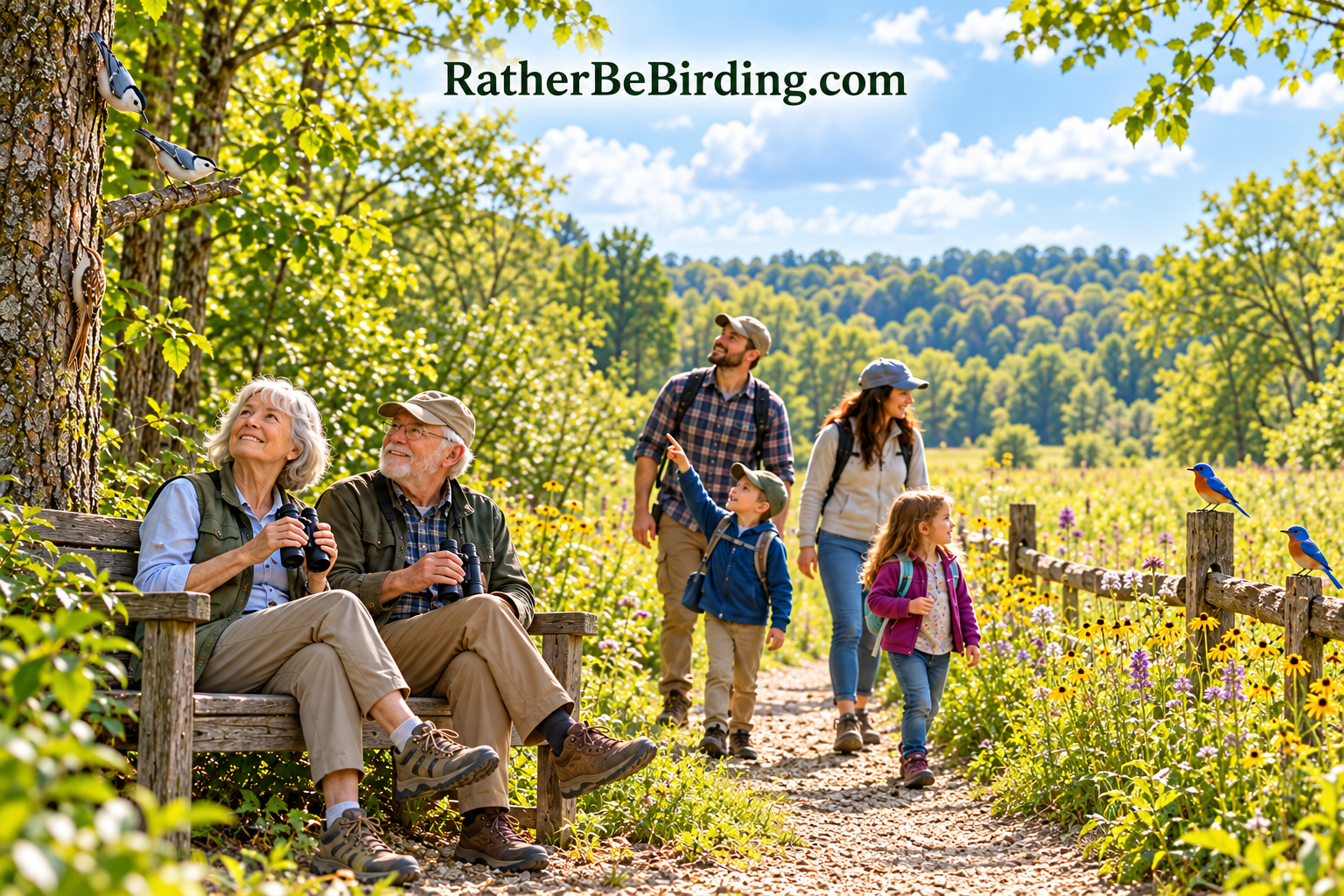


Some interests grow richer with time. Birding gives us new things to notice, familiar places to appreciate, and wonderful reasons to stay curious. Whether you have watched birds for decades or are just beginning, discover how birdwatching can bring learning, companionship, and everyday enjoyment to this season of your life.